Wastewater treatment and water recovery for plating plants
Rinse and concentrate wastewater from plating lines contains acids and bases together with heavy metals such as chrome, nickel, copper and zinc. These streams are collected separately at source. Chromium (VI) is reduced to chromium (III) with sodium bisulphite in acidic conditions; the metals are then precipitated as hydroxides with caustic, and after flocculation and lamella settling the sludge is dewatered in the filter press.

Physico-chemical wastewater treatment
Rinse and concentrate wastewater from plating lines contains acids and bases together with heavy metals such as chrome, nickel, copper and zinc. These streams are collected separately at source. Chromium (VI) is reduced to chromium (III) with sodium bisulphite in acidic conditions; the metals are then precipitated as hydroxides with caustic, and after flocculation and lamella settling the sludge is dewatered in the filter press.
Process steps
- Equalisation
- Krom indirgeme
- Neutralising
- Flocculation
- Lamella settling
- Filter press
- Son kontrol
Applications
- Rinse water from nickel-chrome, hard chrome and Cr³⁺ chrome lines
- Zinc and zinc alloy lines
- Acidic / alkaline wastewater from anodising and phosphating lines
- Wastewater from e-coat and degreasing baths
IPM Galvano scope
- Wastewater characterisation and capacity calculation
- Separate collection of chrome and general acid–base streams
- PLC-controlled pH / ORP dosing system
- Lamella clarifier, filter press and sludge management
Triple-effect falling-film evaporator
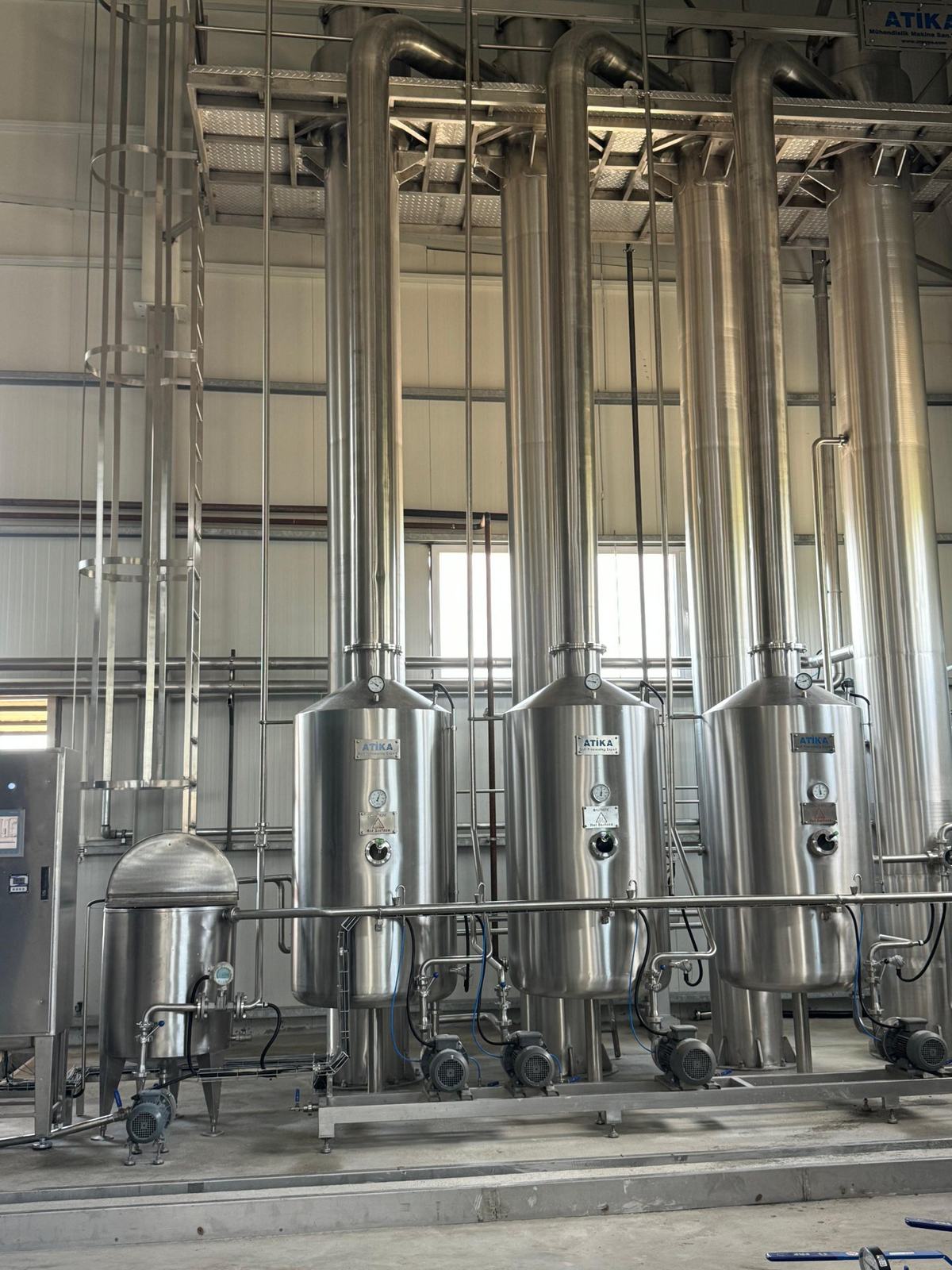
The treatment plant outlet water is evaporated in three stages at progressively lower pressure and temperature. Boiler steam heats only the 1st effect; the vapour from each effect condenses in the heater of the next. The same energy thus evaporates about three times as much water. The distillate returns to the line as process water, and the concentrate is collected separately.
Process steps
- Treatment outlet water
- 1st effect
- 2nd effect
- 3rd effect
- Condenser and distillate
- Concentrate
Applications
- Recovery of treatment plant outlet water
- Concentrating rinse water
- Plants targeting zero liquid discharge
- Regions with limited water resources
IPM Galvano scope
- Number of effects and choice of heat source
- Stainless falling-film columns and separators
- Condenser, vacuum and distillate tank
- Concentrate collection and automation
Rinse water recovery by ion exchange
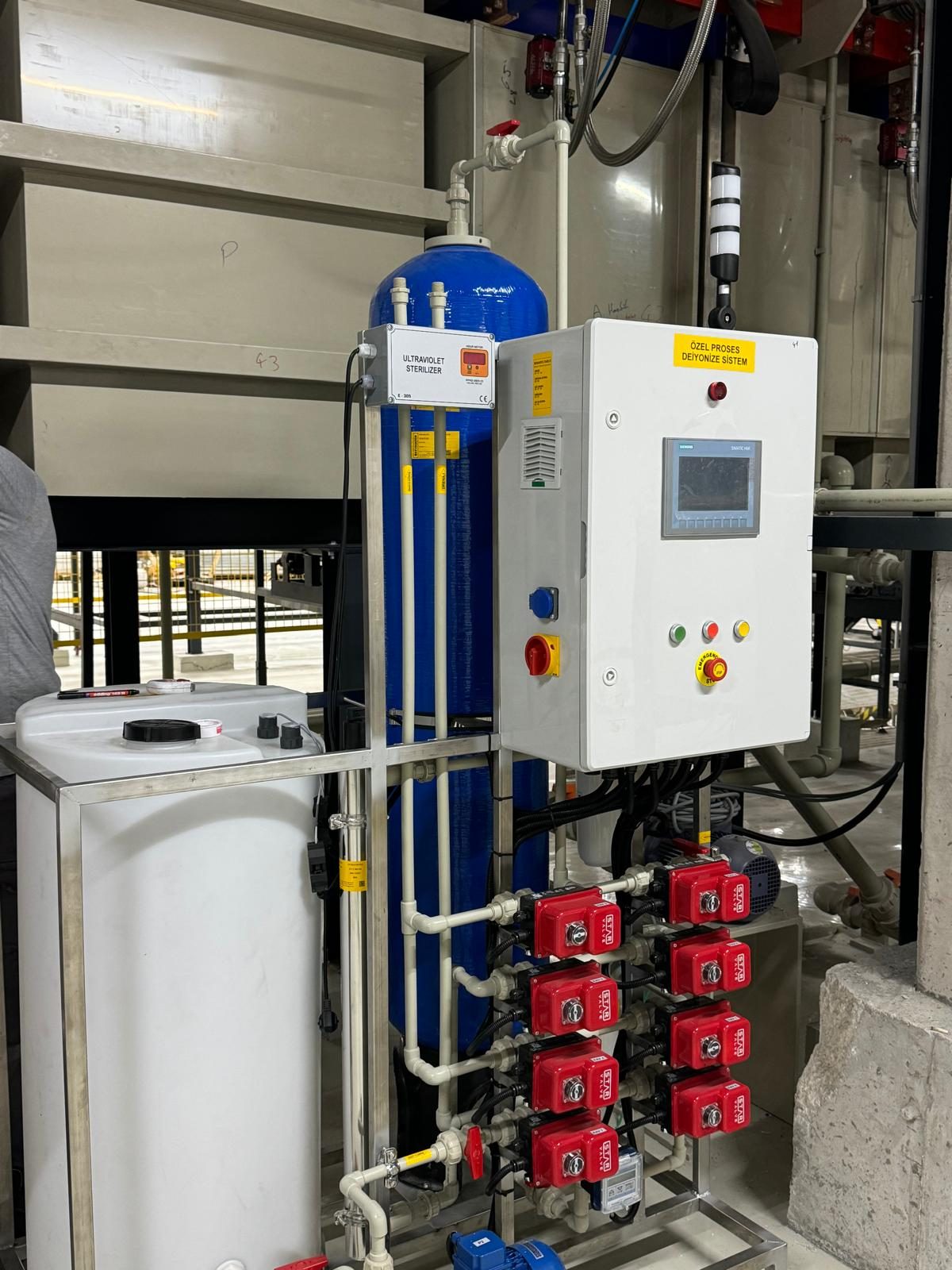
After a pre-filter, rinse water passes through cation, anion and mixed-bed columns. Metal ions are held in the resin, and low-conductivity pure water returns to the line. When the conductivity limit is exceeded, the columns are backwashed and regenerated automatically with acid / caustic.
Process steps
- Rinse water
- Pre-filter
- Cation column
- Anion column
- Mixed bed
- Pure water tank
Applications
- Recovery of nickel, chrome and copper rinse water
- Final rinses requiring pure water (e-coat, anodising)
- Collecting valuable metals in the resin
- Reducing the load on the treatment plant
IPM Galvano scope
- Column and resin sizing
- Conductivity-controlled automatic regeneration
- Acid / caustic dosing and neutralisation
- Pure water tank and distribution
Frequently asked questions
How long does it take to build a line?
The average project takes 4–12 months depending on scope. Duration depends mainly on the number of stations and robots, how ready the building is, and whether wastewater treatment is included.
What information do you need for a quote?
Part material and geometry, size and weight, annual volume or hourly capacity, required coating thickness and corrosion class, hall dimensions and available power / water supply. Part photos or drawings speed up the design.
In which countries have you built lines?
Since 2017 we have built 37 lines in Türkiye, Germany, the Netherlands, Russia and Tajikistan. Besides our headquarters in Bursa we have an office in Solingen (Germany) and a representative office in Russia.
Do you provide support after commissioning?
Yes. We provide maintenance, spare parts, line extensions and upgrades, and can diagnose faults by connecting remotely to the automation system.
Get a quote for your project
Share your parts, capacity and hall dimensions and we will design the line together. One team handles design, manufacturing, installation and commissioning.
Request a quoteMessage us on WhatsAppExplore the line in 3D